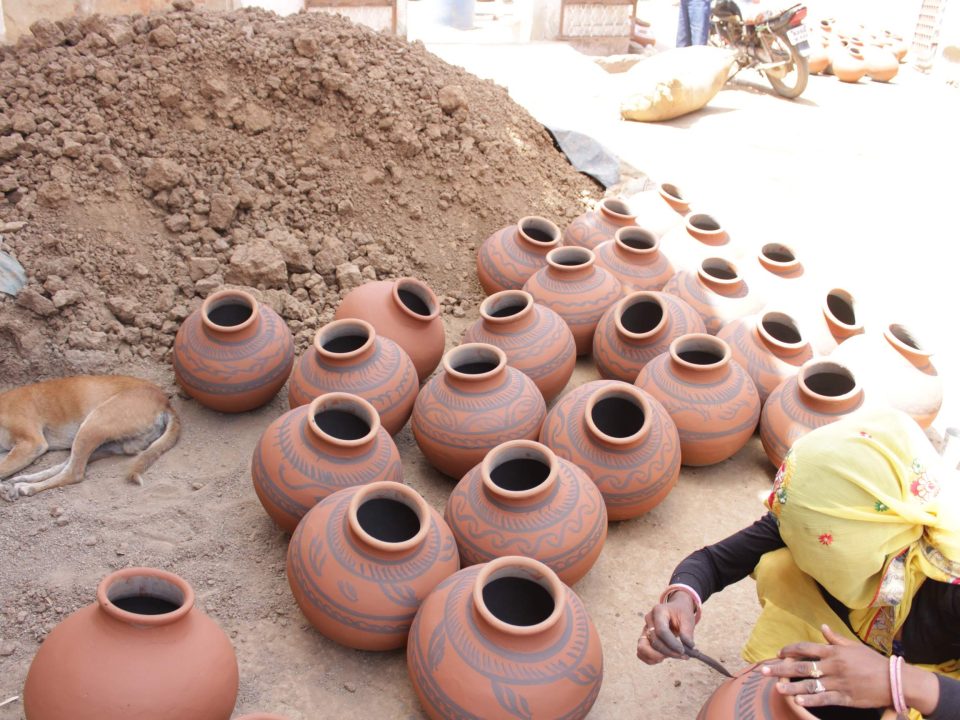
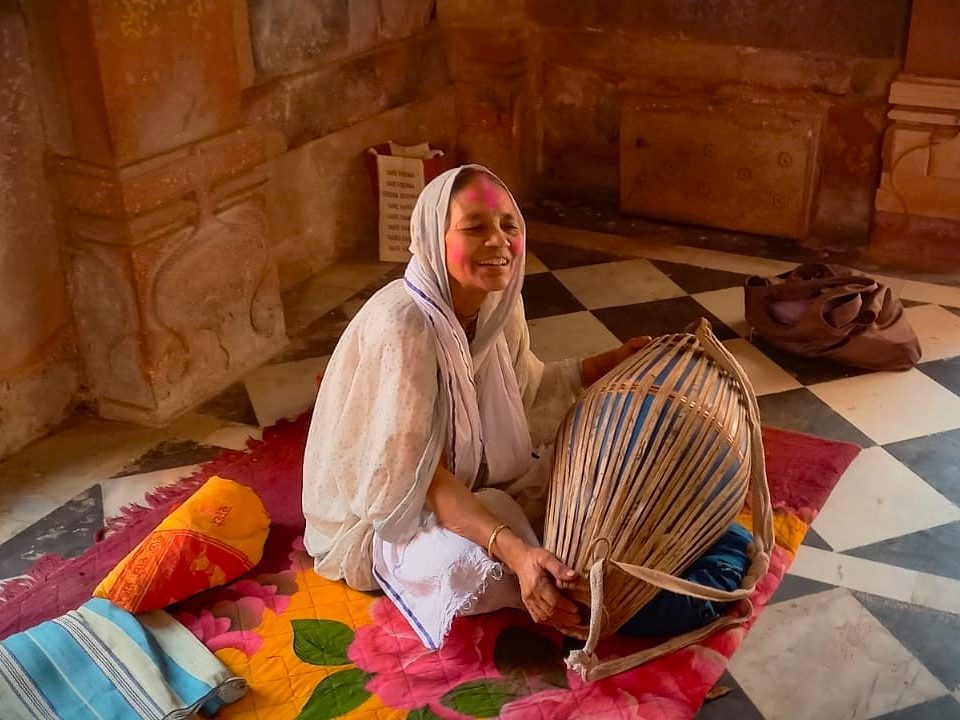
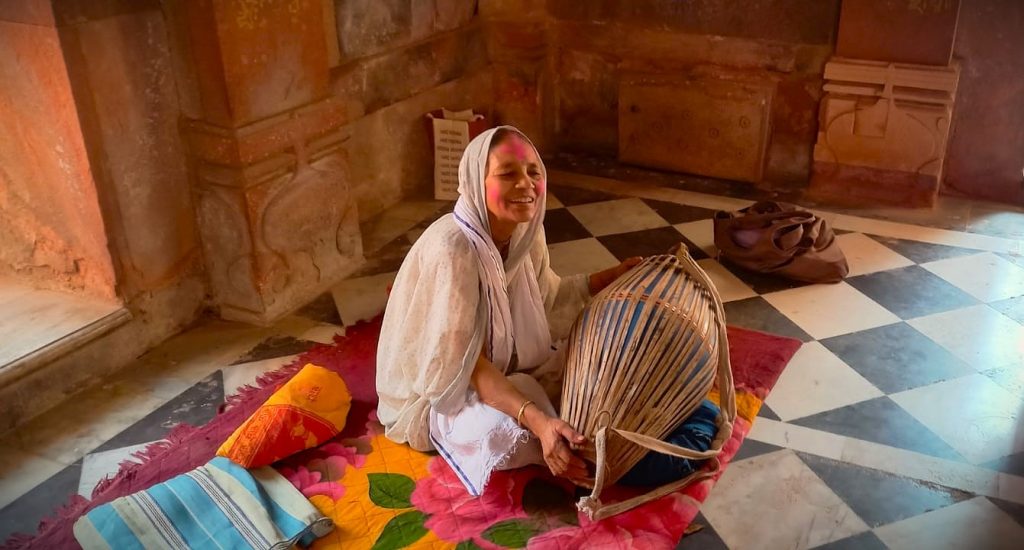
As you know, India is a diverse country by religion, languages, food, traditions, crafts, and others. It is believed that in India every 10 km, the taste of water and language changes. Similarly, the Indian pottery traditions are varied because of the geographical locations. Every place has a unique quality of locally available clay which is commonly known as ‘terracotta clay’. Hence, one can see different types of crafts in terms of size, color, scale, and utility purposes.
One of the old pottery traditions in India is the Black pottery of Nizamabad, UP. It is famous for its shiny black lustrous surface finish with engraved silver patterns resembling the Bidriware / Bidri craft of Karnataka. Learning and mastering this craft in a week is not easy. It takes years to master it. The Master craftsperson Ramjatan Ji National awardee conducted the workshop at IICD.
Ramjatan Ji inherited the skills of Terracotta Black Pottery and Nakashi from his father and taught his wife and children. He has given livelihood to many more by sharing his expertise. His love for reviving his tradition and being updated with the tools, technology, and market gave a lot of insights to the students.
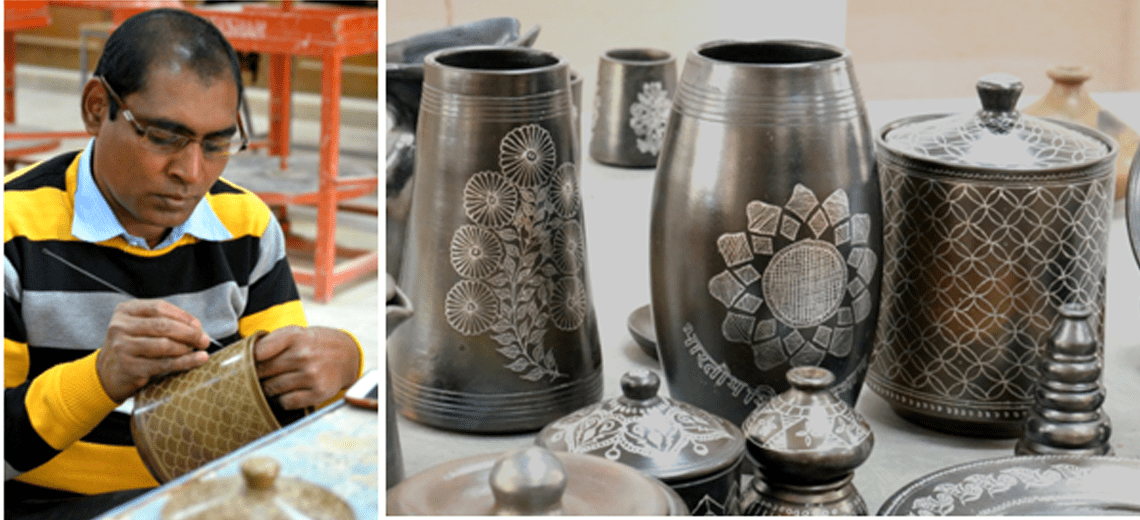
The process is so fascinating that it surprises at every single level.
The Clay Preparation :
- The preparation of the clay is a time-consuming process because it requires a very fine quality of clay. It is beaten to a very fine powder and sieved with a mesh.
- After preparation, clay kneading and wedging are done. Now the clay is ready to be shaped in any form.
The Making :
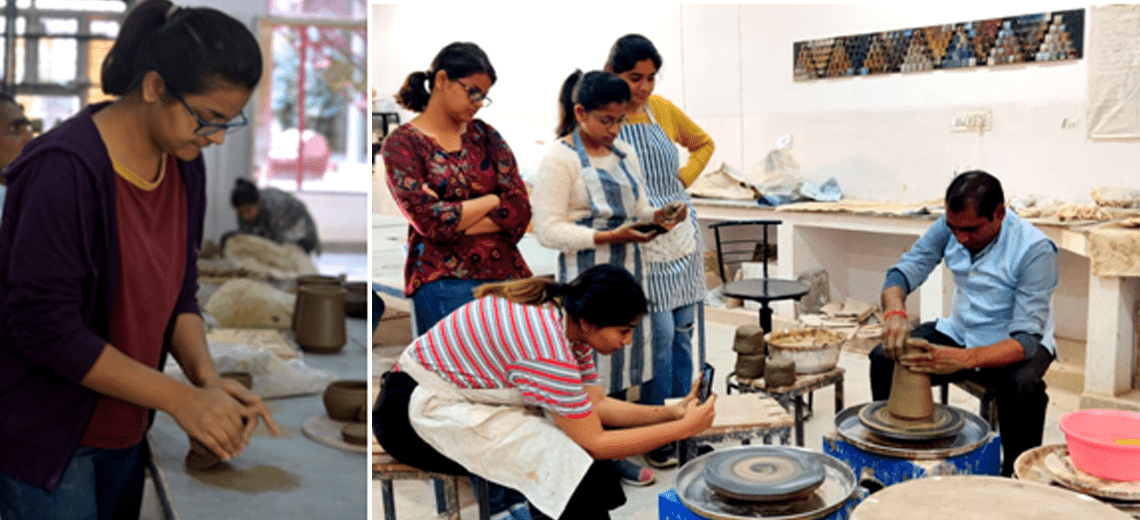
- In the black pottery of Azamgarh, the potter’s wheel is used to build a product. When the forms are in the semi-dried stage, a process of turning is done to remove the excess clay and then it is burnished with a smooth stone.
- After burnishing the forms are finished and rubbed with a muslin cloth and kept in the Sun for drying.
The Luster :
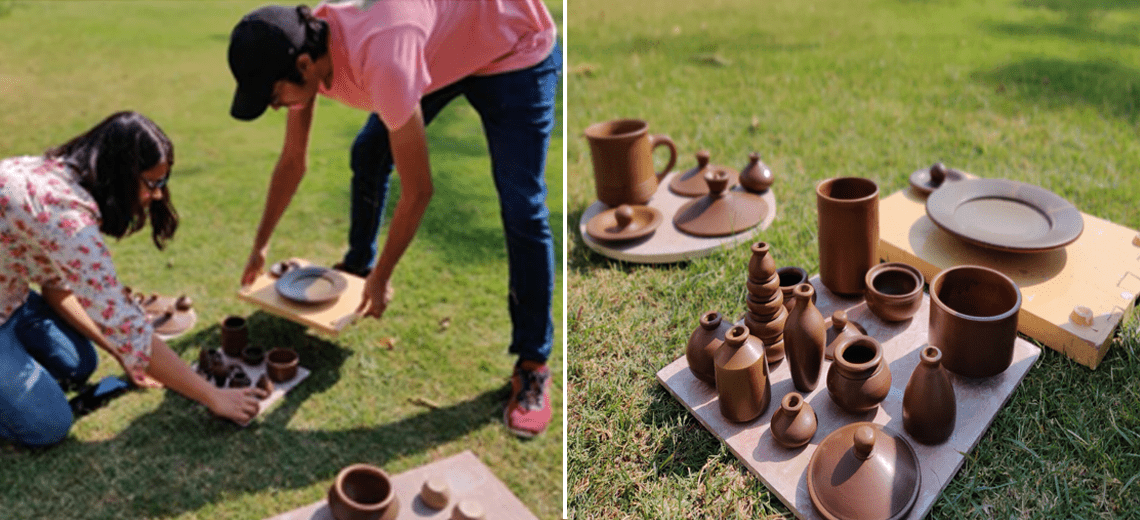
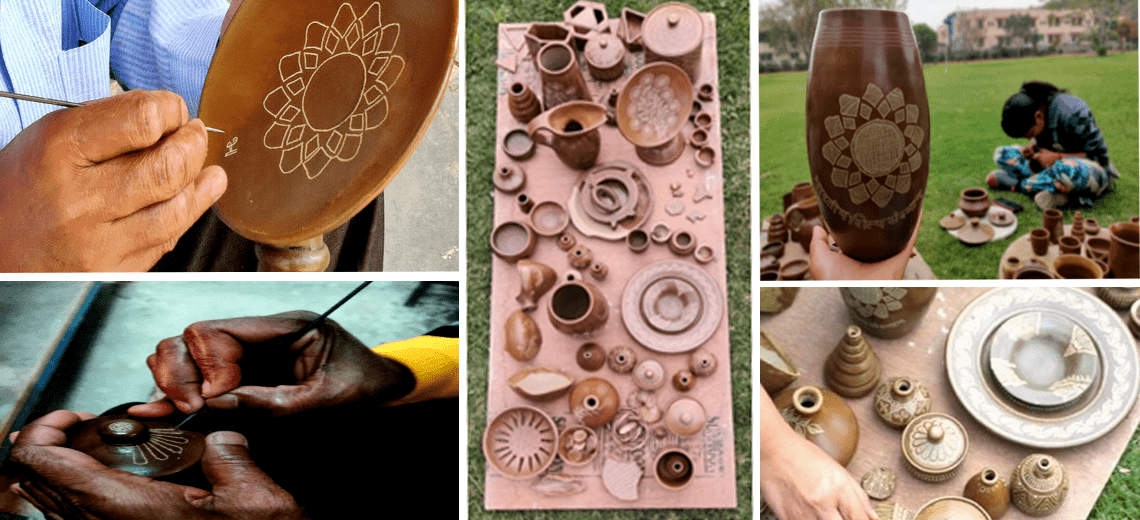
Fully-Dried Piece and Kabbish-Applied Piece
- Kabbish is a clay slip, prepared from locally available ingredients – mango bark, bamboo leaves, and fine local terracotta clay. All the ingredients are soaked in water with some soda. After some days it is beaten with mortar and pestle until it becomes fine. The sieved paste is known as Kabbish.
- Kabbish is applied by dipping or pouring the piece. After the application, the piece is kept in the Sun for drying. This ensures a smooth layer is formed on the surface of the product.
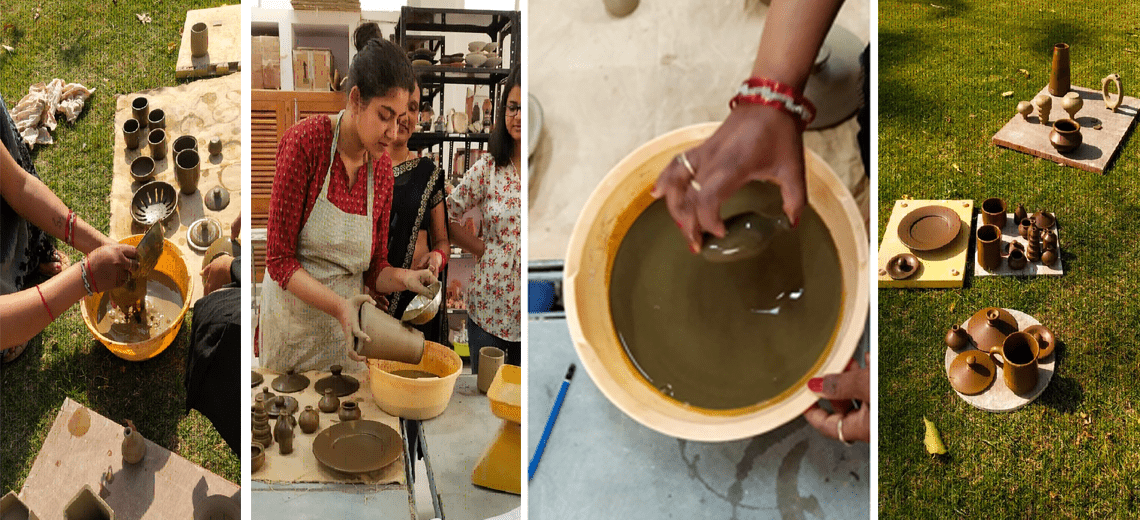
- When the slip is fully dried, mustard oil is applied with a muslin cloth and polished on the surface of the terracotta piece to give it a sheen finish and then kept under the Sun.
The Etching
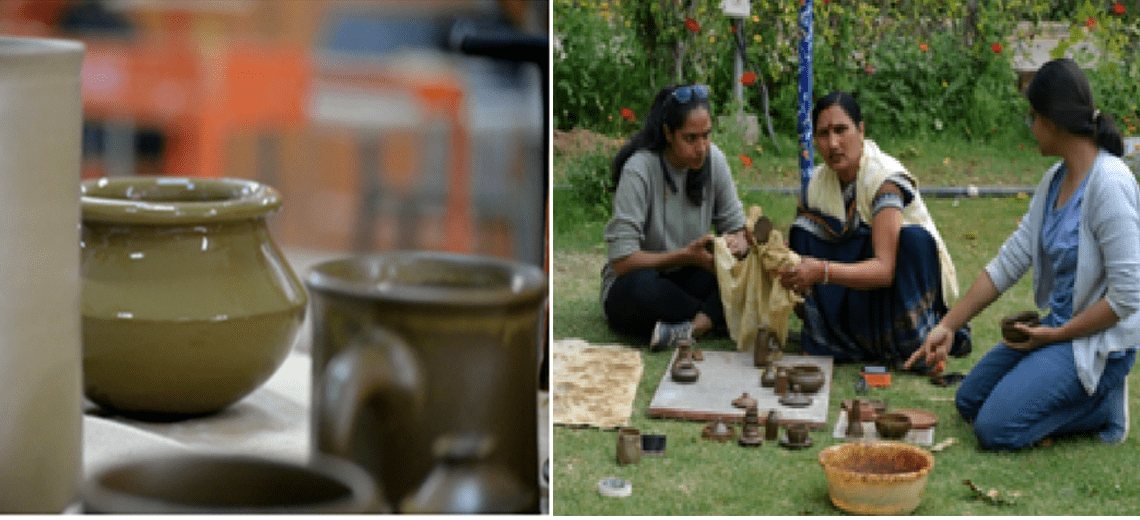
- The intricate patterns, motifs, and designs are etched on the polished surface freehand, with a pointed needle-like metal tool.
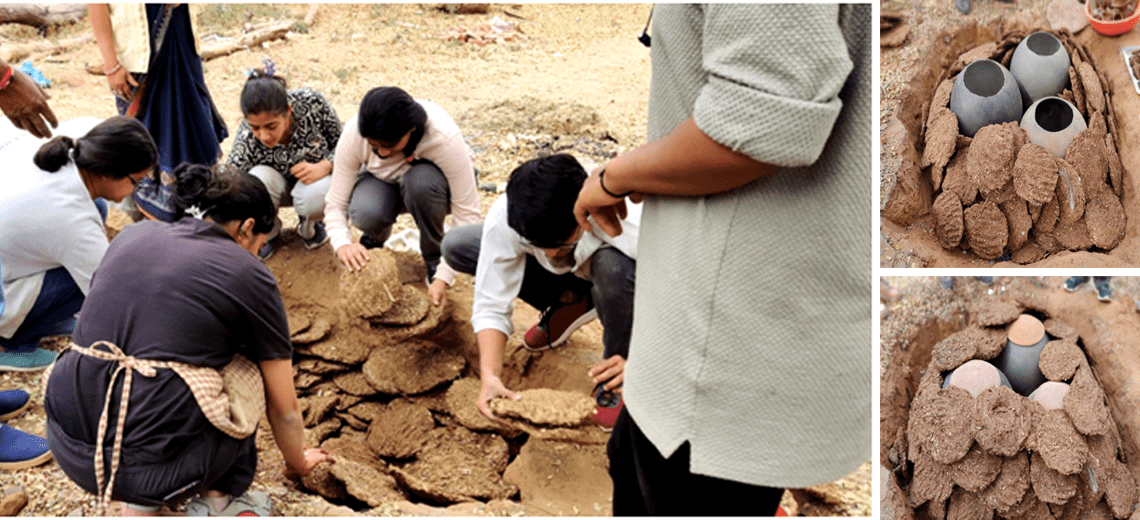
The Pit Firing
- A pit in the ground is made and cow dung cakes are arranged. Matkas (earthen pots) are placed at the top of it. Ready products are placed inside the earthen pots and covered with a lid. Then again cow dung cakes are arranged on the top to cover it.
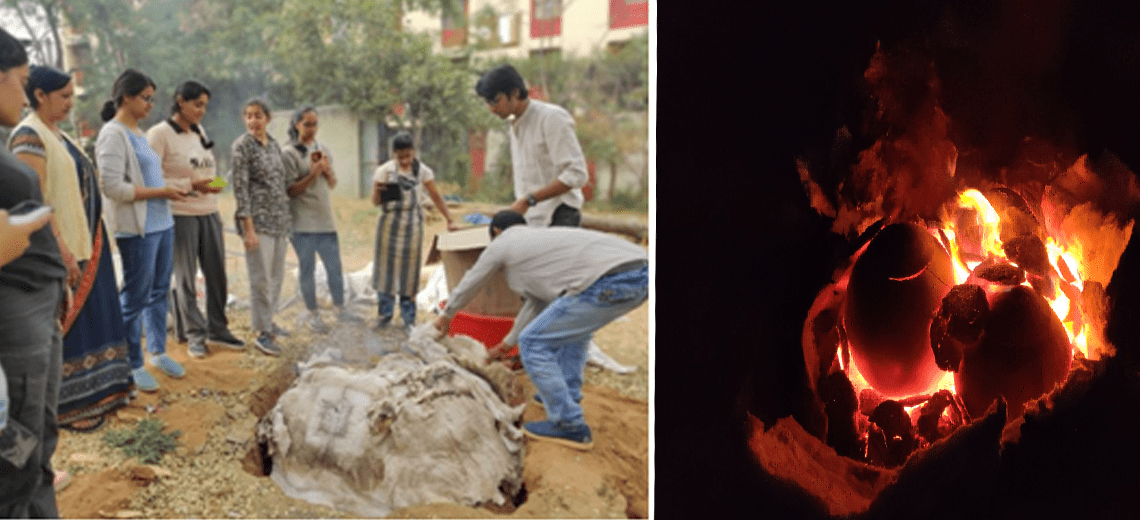
- After lighting the fire, earlier sand and sacks were used to insulate the temperature. But nowadays, Ramjatan Ji uses ceramic wool for insulation. By this invention, he has made the process more efficient and time-saving.
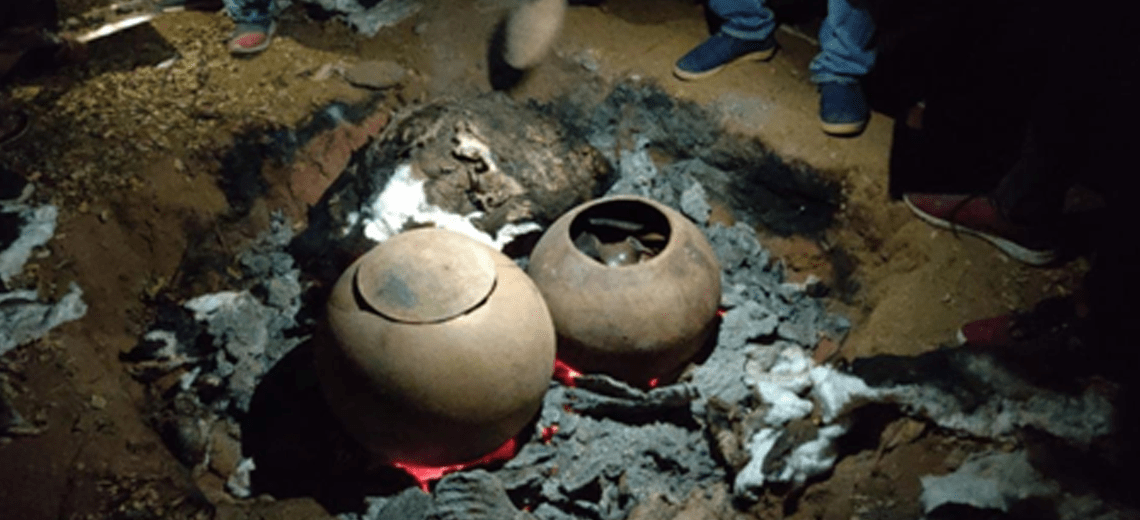
The Reduction
- When the temperature of the pit reaches 700-800 degrees Celsius, ceramic wool is removed and the lid of the earthen pot is opened. Dried goat dung is put in the earthen pot and the lid is closed again. The oxygen supply diminishes and carbon created in the earthen pots sticks to the product’s surface. The product is taken out the next day when the temperature becomes normal.
The Nakashi
- The engraved patterns are filled with lead zinc and mercury. All three are mixed and filled in the etched surface. Water is rubbed on the surface to get the brilliant luster.
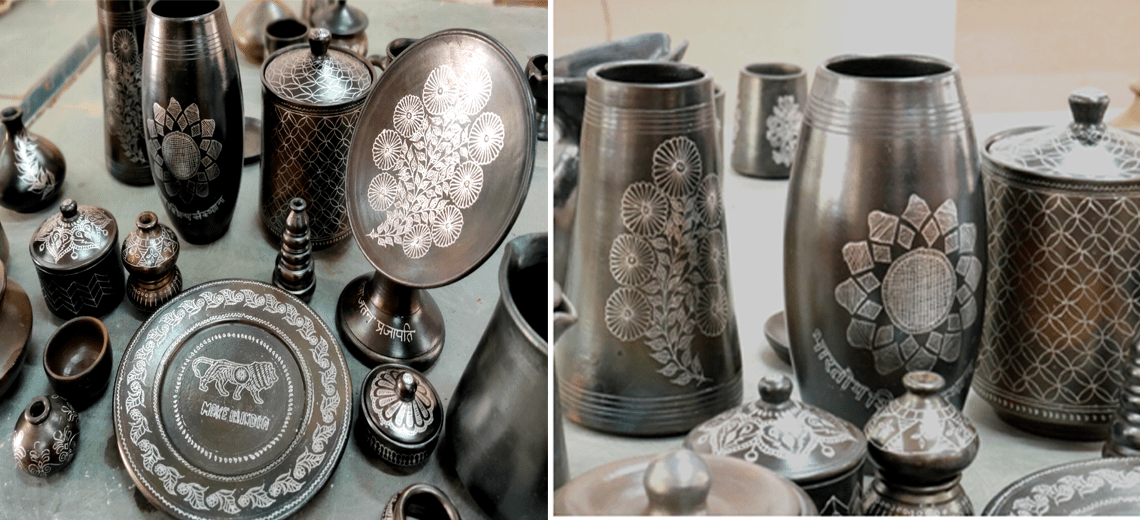
IICD and Black Pottery
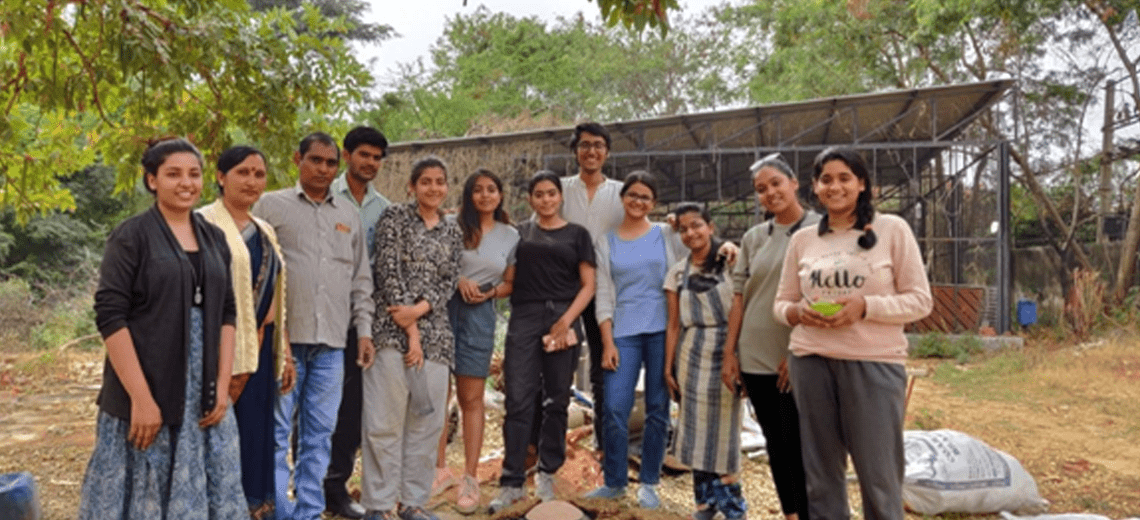
IICD is the only institute where you can learn, imagine, explore, and create new possibilities in craft and design. Learning from craftspeople in the field and knowing their issues and challenges in the market makes you sensitive towards the craft.
The myth about black pottery that it is not safe for cooking as the surface is black. However, it is as safe as the red earthenware used for cooking. Although, It is suggested not to use black pottery with Nakashi as the engraved patterns are filled with lead, zinc, and mercury which can be harmful. Nakashi is therefore used only for decoration purposes.
Ms Garima Chaudhary, R.A.
Fired Material Department
Indian Institute of Crafts and Design